


Nymphaea is a genus of water lilies. Different flower colors have been reported for Nymphaea species. For horticultural applications, blue flowers are desired. In order to understand the genetic basis of the pigmentation in Nymphaea, we have started to sequence the genomes of several species in the Botanical Gardens.
Our method for plant genome sequencing utilizes a protein nanopore that sits in a synthetic membrane. As a single DNA molecule moves through this nanopore, an electric signal changes and can be measured over time. This allows us to infer the composition of nucleotides that is blocking the nanopore in any given moment. Descriptions of this sequencing technology are available in Pucker et al., 2022 and de Oliveira et al., 2026.
Digitalis purpurea
Digitalis purpurea (common fox glove) is a well known ornamental plant in Germany. Due to some specialized metabolites produced by this plant, it is largely considered as toxic.

Our research focuses on understanding why these different flower colors exist. By comparing the genomes of purple and white plants, we identified a likely cause for the white flowers. The difference appears in a gene encoding the anthocyanidin synthase, which plays an important role in producing pigments known as anthocyanins. These pigments are responsible for the floral pigmentation in many plants, where the play an important role in pollinator attraction.
Anthocyanins are not only important for color—they also help plants deal with environmental stress, such as strong sunlight. Interestingly, we estimated the genetic change that leads to white flowers in this species to be very old – at least 900.000 to several million years old. This raises an important question: if anthocyanins are beneficial, why has this mutation persisted for so long? Does lacking these pigments reduce the plant’s ability to survive and reproduce?
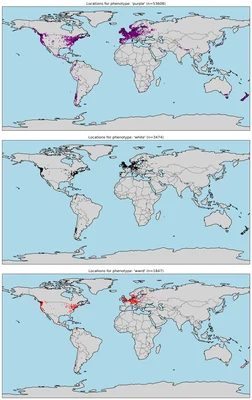
To explore this, we looked at foxglove plants around the world. Although Digitalis purpurea is native to Europe, it has been introduced to many other continents. This global distribution allows us to study how different environments might influence which flower types are more common.


By introducing genes into Utricularia, the plant should be enabled to produce compounds of interest and to secret these into the trap. Since harvesting of traps is well established in the group, this might be established as an effective purification strategy.
Victoria cruziana
We sequenced the genome of the giant water lily Victoria cruziana and investigated the genetic basis of a fascinating flower color transition from white to pink (Nowak et al., 2025). A German summary of these research activities is available here.

The giant water lilies of the genus Victoria are among the most spectacular plants you can encounter in a botanical garden. With their enormous floating leaves and remarkable flowers, they capture the attention of every visitor. The floating leaves of Victoria cruziana can carry >80 kg of weight. However, it is important that this weight is allocated equally across the leaf surface. But beyond their impressive appearance, they are also the focus of cutting-edge scientific research.
🌿 A plant full of surprises
One of the most fascinating features of Victoria flowers is their color change. The flowers typically open white and later turn pink. This transformation is not just beautiful—it plays an important role in pollination and plant reproduction. Understanding how and why this color change happens is a key question for scientists.
🔬 What is the Pucker Lab studying?
Researchers in the Pucker Lab at the University of Bonn are investigating Victoria species—especially Victoria cruziana—to uncover the genetic basis behind their unique traits. The team presents a high-quality genome sequence of this giant water lily, combined with detailed analyses of gene activity (RNA-seq). This means decoding the plant’s complete set of DNA instructions and observing which genes are active at different stages—such as during the flower’s color change.
🧬 Important discoveries
- 🌸 Genes regulating the flower color: The team identified candidate genes that likely control the shift from white to pink flowers.
- 🧪 Biochemical pathways inside the plant: These genes are part of larger networks that produce pigments—similar to those responsible for colors in many other flowers.
- 🌱 How traits are regulated: By combining genome and RNA data, scientists can see not just which genes exist, but when and where they are active.
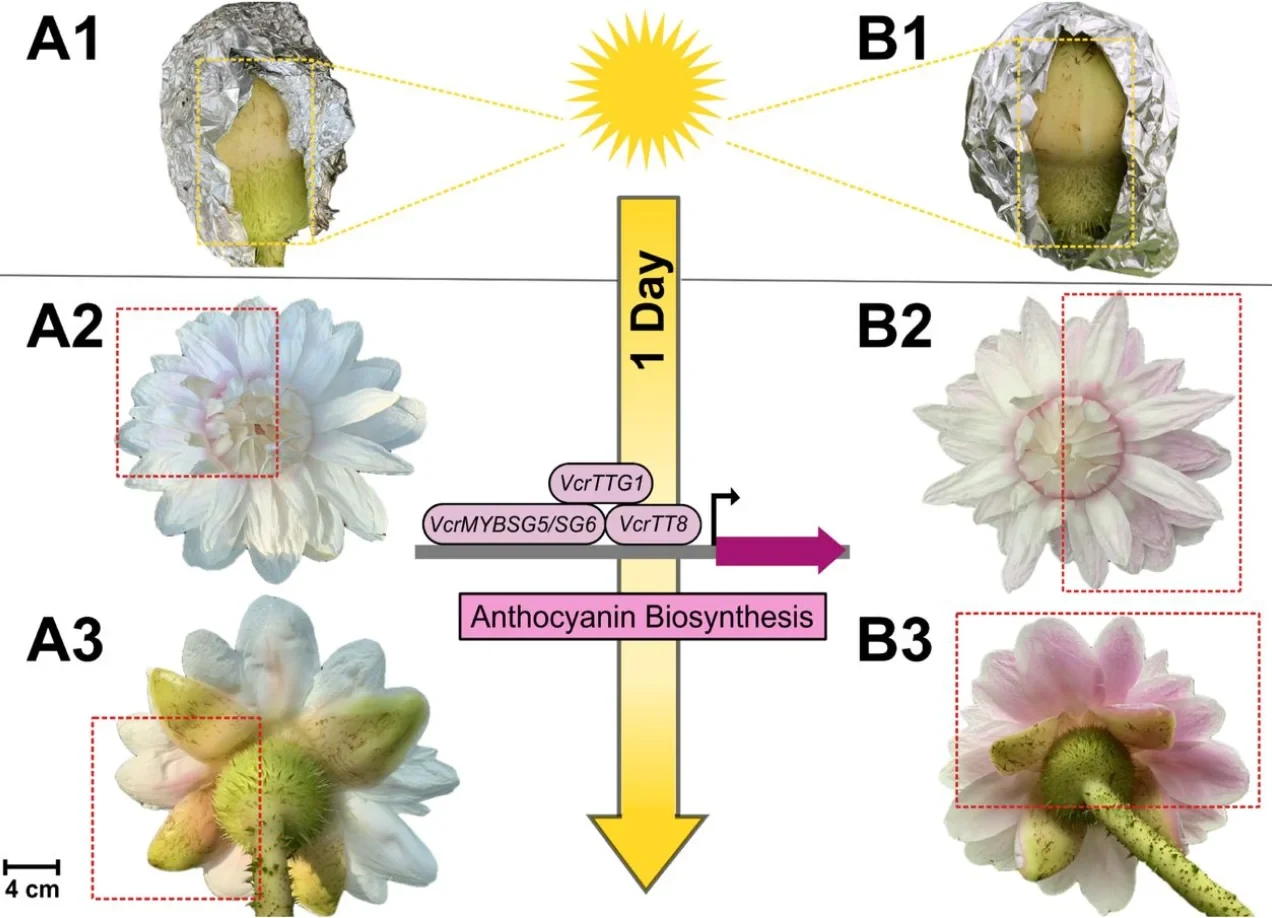
The color of newly emerging Victoria cruziana flowers is white. After one night, the flowers turn pink. We investigated different mechanisms that could contribute to this color transition including pollinators and sun light exposure. Our results indicate that the anthocyanin biosynthesis in the flowers is induced by sun light. Covering the flower with alumnium foil presented the onset of pigmentation.